Mostrando entradas con la etiqueta FESTIVALS. Mostrar todas las entradas

domingo, 27 de noviembre de 2016

LEARNING ABOUT THANKSGIVING


JORDAN PREPARE A POWER POINT ABOUT TNAKSGIVING STORY AND HE TEACHES IN SOME ENGLISH CLASS,SHOWING TO THE CHILDREN THE MEANING OF THIS SPECIAL FESTIVAL IN THE USA.

Jordan explains to children what they must thanksful for.


THANKSGIVING DAY


TODAY IS 24TH NOVEMBER AND IN AMERICAN COUNTRIES CELEBRATE THANKSGIVING DAY(DÍA DE ACCIÓN DE GRACIAS).

HERE YOU CAN READ A SUMMARY ABOUT THANKSGIVING STORY:


jueves, 26 de noviembre de 2015

CHRISTMAS POEM

A VISIT FROM ST. NICK
(T'WAS THE NIGHT BEFORE CHRISTMAS)
This is the Spanglish version of this famous  holiday poem.  It does not quite match the English version, so that the words rhyme.  It is close enough so that you can use it as a guide to figure out the Spanish words.  If you do not know a Spanish word then click on the highlighted word (or phrase) to see its definition. The definition will appear in the box to the right.  There will be a running list of the words with the last word you clicked on appear at the top.
'Twas the night before Christmas and all through the casa, not a creature was stirring - ¡Caramba! ¿Qué pasa?   Los niños were tucked away in their camas, some in long underwear, some in pijamas, while hanging the stockings with mucho cuidado, in hopes that old Santa would feel obligado, to bring all children, both buenos and malos, a nice batch of dulces and other regalos. Outside in the yard there arose un gran grito, and I jumped to my feet like a frightened cabrito. I ran to the window and looked out afuera, and who in the world do you think that he era? Saint Nick in a sleigh and a big red sombrero, came dashing along like a loco bombero. And pulling his sleigh instead of venados, were eight little burros approaching volando. I watched as they came and this quaint little hombre, was shouting and whistling and calling by nombre: ''Ay Pancho, ay Pepe, ay Cuco, ay Beto, ay Chato, ay Chopo, Maruco, y Nieto!'' Then standing erect with his hands on his pecho, he flew to the top of our very own techo, with his round little belly like a bowl of jalea, he struggled to squeeze down our old chimenea. Then huffing and puffing at last in our sala, with soot smeared all over his suit de gala, he filled all the stockings with lively regalos, none for the ninos that had been very malos. Then chuckling aloud, seeming very contento, he turned like a flash and was gone como el viento,  and I heard him exclaim, y ¡esto es verdad!  Merry Christmas to all, ¡y Feliz Navidad!


Resultado de imagen de ST NICK

SPANISH FESTIVALS


SPANISH FESTIVALS

Festivals play a very important part in Spanish life.  Click below to learn more about some specific festivals.


Christmas & Three Kings Day (M)


Fallas de San José - March 19th (Valencia)


La Tomatina -Last Wednesday in August (Valencia)


Saint George's Day - April 23rd (Catalonia)


Spring Fair - April - (Seville)


La Descarga - July 16th (Asturias)


Dance of the Stilts - July 21-23 (La Roja)


All Saints Day - November 1st (Spain)


Carnival - Beginning of Lent (Spain)

CHRITSMAS IN SPAIN 4


LOS TRES REYES MAGOS
wiseman_camel_ride_journey_md_wht.gif (27660 bytes) three_wisemen_looking_north_star_md_wht.gif (14093 bytes) wiseman_on_camel_searching_md_wht.gif (13183 bytes)
Los Tres Reyes Magos literally means "The Three King Wizards", but is usually interpreted to mean "The Three Wise Men" or "The Three Kings".  Their celebration day (January 6th)  is refered to as "Three Kings Day" or just "The Day of the Kings".
As you may know the Three Kings, Balthasar (Spanish = Baltasar), Gaspar and Melchior (Spanish = Melchor) arrived twelve days after the birth of Jesus, bearing their famous gifts of gold, and frankincense and myrrh. 
As such in Spain, this is the day that people give and receive gifts.   And as children in the United States and other countries might wait with great anticipation the arrival of Santa Claus, in Spain the children await the arrival of the Three Kings.
On January 5th in most Spanish towns is the "la cabalgata" (the calvacade) which is a parade marking the arrival of the Three Kings.  The Three Kings ride on floats throwing candy to the children.  In the Canary and Balaeric Islands the Three Kings arrive by ship! 
After the parade the children return to their homes to prepare for the arrival of the Three Kings.  They place their shoes on the windowsills and fill them with straw, carrots and barley for the donkeys of the Three Kings.  Sometimes they might also leave some food for the Three Kings.  The next morning the children wake up early to open their presents. Although the children like all of the Three Kings, their favorite is Baltasar because he is the one who it is believed actually leaves the gifts.  This is also the day that adults will get their presents although of course these are not delivered by the Three Kings.

CHRISTMAS IN SPAIN 3

cartoon_family_of_grapes_bounce_md_wht.gif (22573 bytes) Nochevieja grapes_ripen_single_md_wht.gif (11383 bytes)
New Year's Eve in Spain is called "Nochevieja - The Old Night".  Hours before midnight on New Years Eve, tens of thousands of people gather in Madrid’s Puerta del Sol to await the chimes of the clock on the tower which dominates the Spanish capital’s central square. The excitement builds up as the magic hour approaches. Finally, at the stroke of midnight and the dawn of the new year, everyone will eat twelve grapes, one for each chime.
But, how do you know when twelve o'clock is? Well, decades ago, in many families the head of the family would pick up a pot or a pan and just hit it twelve times. Today, however, La Puerta del Sol in Madrid rules on that day. There is a clock on top the La Puerta, and when the twelve gongs start, you'd better be ready to start gulping down those grapes. Just one word of advice, before the twelve official gongs, there are the Cuartos, four gongs of a higher pitch that announce and warn you to get ready for the 12 gongs. Don't get confused and start gulping down the grapes yet. Beware of the Cuartos. 

puertasolj.jpg (39720 bytes)
This is a picture of La Puerta del Sol. Notice the clock just to the left of the star on the tree.  The bell is just above the clock.
Unlike many Spanish traditions the eating of grapes (tomar las uvas) is of quite recent vintage. Early in the twentieth century, according to most versions of the story, freak weather conditions resulted in an unseasonable bumper harvest of grapes. At a loss over what to do about so many grapes at Christmas time, the grape growers came up with the idea of the New Year ritual.


CHRISTMAS IN SPAIN 2


NOCHEBUENA
n_md_wht.gif (5668 bytes)o_md_wht.gif (5822 bytes)c_md_wht.gif (5698 bytes)h_md_wht.gif (5613 bytes)e_md_wht.gif (5732 bytes)b_md_wht.gif (5980 bytes)u_md_wht.gif (7934 bytes)e_md_wht.gif (5732 bytes)n_md_wht.gif (5668 bytes)a_md_wht.gif (6381 bytes)exclamation_md_wht.gif (5379 bytes)
Christmas Eve is known as "Nochebuena" (the Good Night). It is a time for family members to gather together to rejoice and feast around the Nativity scenes that are present in nearly every home. The Christmas Eve gaiety is interrupted at midnight by the ringing of bells calling the families to "La Misa Del Gallo" (Rooster's Mass).
Christmas dinner is often eaten late at night, but before midnight on Christmas Eve so that families may attend mass. It is a family feast, and often highlighted with "Pavo Trufado de Navidad" (Christmas turkey with truffles; truffles are a mushroom-like delicacy found underground). After the meal, family members gather around the Christmas tree and sing Christmas carols. The celebrations usually go on very late, one old Spanish verse says...
          "Esta noche es Noche-Buena, Y no es noche de dormir"
          (Tonight is the goodnight,and it is not meant for sleeping.) 


man_belly_laughing_md_wht.gif (19434 bytes)
El Día de los Santos Inocentes
man_laughing_at_you_md_wht.gif (12676 bytes)
The 28th of December is Innocents' Day, similar in spirit to the American April Fools' Day. On this day, people play inocentadas (pranks or practical jokes) on friends and relatives: people make jokes hoping that the victim believes the false thing. When people get caught, the joker says: "Inocente, inocente!" ("Innocent, innocent!"). The newspapers and other media are in on the joke as well, reporting false news for the people to figure out. In some parts of Spain young boys of a town or village light bonfires and one of them acts as the mayor who orders townspeople to perform civic chores such as sweeping the streets. Refusal to comply results in fines which are used to pay for the celebration.
For sheer exuberance and entertainment, the Fiesta de Verdiales in Malaga outdoes them all. It begins around midday at a wayside inn on the old mountain road between Málaga and Antequera. Thousands of people converge on La Venta del Tunel to watch country musicians in 20 groups locked in a contest to see who can play the longest and loudest.


CHRISTMAS IN SPAIN 1

CHRISTMAS
IN
SPAIN
turkey_dinner_showcase_md_clr.gif (19265 bytes)
Christmas in Spain is unlike Christmas in the United States.  The Christmas season runs much longer.  While in the United States it ends on Christmas Day, in Spain it continues to January 6th, Three Kings Day.  There are many activities that go on during this time including, Christmas Eve (called Nochebuena), Christmas Day, New Years Eve (called Nochevieja) and the anticipation of the arrival of the Three Kings on January 6th.  Also during this time is a very important lottery called "El Gordo" along with many other activities.
Because Spain has a strong religious history, Christmas is a more holy day than in the United States.  Some gifts may be given, but mostly it is a time to spend with family. While Santa Claus is known in Spain, he is not as important.  In fact in some places children are told that if they are bad Santa Claus will come and take them away.
The day that gifts are given is on Three Kings Day (el día de Reyes).  This is keeping with the religious tradition that this was the day that the Three Kings (Los Tres Reyes Magos) arrived bearing gifts.   Please read the sections below to learn more about Christmas in Spain.


CHRISTMAS VOCABULARY


CHRISTMAS VOCABULARY TERMS


DÍAS FESTIVOS 

(FESTIVAL DAYS)

las vacaciones de Navidad - the Christmas holidays
Nochebuena - Christmas Eve (literally "night good")
día de navidad - Christmas Day
el día de los Santos Inocentes - 28th December (similar to April Fool's Day).  On this day you play practical jokes "las inocentadas".  In Ibi (Alicante) locals battle each other with flour. In Velez-Rubio (Almería), a citizen is appointed mayor for the day and has anyone who shows up in the town square arrested and taken off to the local lock-up.
Nochevieja - New Year's Eve (literally "night old")
Año Nuevo - New Year
el día de año nuevo - New Year's Day
la Noche de Reyes - Three Kings Day Eve (5th of January)
la cabalgata de los Reyes Magos - the procession of the three kings.  This is a parade held on 5th of January.
el día de Reyes - Three Kings Day (6th of January)


COSAS NAVIDEÑAS
(CHRISTMAS THINGS)

árbol de Navidad - Christmas tree
regalo de Navidad - Christmas present
adornos de Navidad - Christmas decorations
una corona de Navidad - Christmas wreath
el muérdago - mistletoe
el acebo - holly
flor de Navidad/flor de Pascua (Spain) - poinsettia
la comida del día de Navidad - Christmas dinner
un tarjeta de Navidad, un crismas - a Christmas card
el espumillón - tinsel
la misa del gallo - Midnight mass (literally "mass of the rooster".  It is called this because it is said that the only time a rooster crowed at midnight was on the day that Jesus was born.)
nacimiento - nativity scene
un villancico - Christmas carol
adorno (árbol de Navidad) - Christmas decoration
Baltasar, Gaspar, Melchor - Balthasar, Gaspar, Mechior (3 wise men/3 kings)
los Reyes Magos - the three kings, three wise men
tomar las uvas - eat grapes
un auto de Navidad - a nativity play
¡Feliz Navidad! - Merry Christmas!
¡Felices Fiestas! - Seasons Greetings!
¡Feliz Navidad y Próspero Año Nuevo! - Merry Christmas and a Happy/Prosperous New Year!
¿Qué te regalaron para Navidad? - What did you get for Christmas?
La Navidad está en puertas - Christmas is just around the corner
el espiritu navideño - the Christmas spirit
oro - gold
incienso - frankincence
mirra - myrrh
los pastores - shepherds
los ángeles - angels
un burro - donkey
Papá Noel - Santa Claus (literally "Father Christmas")


COMIDA
(FOOD)

un tronco de Navidad - a Christmas yule log
un pastel de Navidad - a Christmas cake
el pavo - turkey (Pavo Trufado de Navidad - Turkey with Truffles - is a common Christmas day meal)
mantecados - traditional christmas sweet made with almonds
polvorones - traditional christmas sweet made with almonds.   They are also known as "Wedding Cookies".
una rosca de Reyes/un roscón de Reyes - a large, round bun baked for the 6th of January with candied fruits.  Inside is hidden prizes such as coins.
Turrón - a typical Spanish nougat sweet eaten at Christmas
mazapán - marzipan

martes, 9 de diciembre de 2014

Entrega de Premios (Tarjetas de Halloween)


Leslie, auxiliar de conversación de nuestro colegio, entrega los premios a los gandores y finalistas del II Concurso de tarjetas de Halloween.
Aquí os dejamos una muestra de este acto, a través de estas fotos.

Congratulations to Gema, Anabel, Carlos and Emilio!


martes, 18 de noviembre de 2014

THANKSGIVING DAY

A WESQUEST TO WORK THANKSGIVING DAY


1-WHAT´S THANKSGIVING?

2-WHAT DOES THANKSGIVING MEAN?

3-HOW WAS  THANKSGIVING BORN IN AMERICAN CULTURE?

4-WHAT IS THE "MAY FLOWER"?

5- WHO WERE KNOWN LIKE THE PILGRIMS?

6-WHAT´S THANKSGIVING CELEBRATION?

7-WHICH WAS THE PRINCIPAL FOOD IN THANKSGIVING?

8-WHAT CAN WE DO IN THANKSGIVING, IN THE MORNING?

9-WHAT CAN WE DO A DAY BEFORE OF THANKSGIVING?

10-WHAT IS  THE THANKSGIVING PRESIDENTIAL PROCLAMATION? WHEN WAS THE FIRST PROCLAMATION?

11-WHAT  THE PRESIDENT OBAMA SAID IN HIS THANKSGIVING PROCLAMATION?

12-WHAT DOES SYMBOLIZE "THE THANKSGIVING TURKEY"?

13-WHAT IS THE ANNUAL PARDONING OF THE NATIONAL TURKEY?

14-DO YOU KNOW THE  THANKSGIVING STUFFED TURKEY  RECIPE?WRITE IT!

15- WHAT IS THE "GREEN BEAN CASSEROLE"?WRITE YOU ITS INGREDIENTS?

PARA BUSCAR INFORMACIÓN:

THANKSGIVING DAY 

THANKSGIVING HISTORY

TRADICIONES DE THANKSGIVING

THANKSGIVING PRESIDENTIAL-PROCLAMATION

THANKSGIVING TURKEY

GREEN BEAN CASSEROLE


YOU CAN SEE THESE MOVIES FOR TO KNOW BETTER THIS CELEBRATION

THE STORY OF THANKGIVING

DUCK FOR TURKEY DAY(READING)

THE AMERICAN THANKGIVING STORY

THE FIRST THANKSGIVING 


THE THANKSGIVING DAY HISTORY PRESENTATION

HERE YOU HAVE SOME SONGS ABOUT THANKSGIVING

THANKSGIVING DAY-HOLIDAY SONGS

THANKSGIVING SONGS FOR CHILDREN

THANKSGIVING SONGS FOR CHILDREN-LITTLE PILGRIM 

jueves, 23 de octubre de 2014

HALLOWEEN


TO TEACH HALLOWEEN VOCABULARY, WITH PICTURES.

HALLOWEEN FLASHCARDS


NOW SOME HALLOWEEN POSTER TO PASTE IN THE CLASSROOM


Here you have some interesting pages, to make crafts and to decorate your classes in Halloween.
A bag as a spider to carry sweets


OTHER CRAFTS FOR CHILDREN


YOU CAN SEE SOME HALLOWEEN STORIES IN YOUTUBE


HALLOWEEN PARA PEQUES


HAPPY HALLOWEEN FUNNY ANIMATION


HALLOWEEN SONGS FOR CHILDREN

LUMPKIN THE PUMPKIN

SPOOKY SPOOKY

THE HALLOWEEN SONG

SHAKE DEM HALLOWEEN BONES


HALLOWEEN SONGS FOR KIDS


CELEBRAMOS HALLOWEEN EN NUESTRO COLEGIO:
II CONCURSO DE TARJETAS DE HALLOWEEN


El 31 de octubre es una de las fiestas más esperadas del año en el mundo anglosajón y, cada vez más, esta tradición se está trasladando a España. La noche de Halloween, víspera del tradicional Día de Todos los Santos, se ha convertido por sí misma en una fecha destacada dentro de nuestro calendario, aunque sólo sea fiesta de manera oficiosa.

Halloween (contracción de la expresión inglesa «All hallow’s eve») significa literalmente «víspera de Todos los Santos». La celebración llegó a Estados Unidos a través de los irlandeses que emigraron desde su país de origen hasta el norte del continente americano. La festividad tenía su origen en la tradición celta, pero con el paso de los siglos y la expansión del cristianismo en Europa, la víspera del 1 de noviembre adquirió cierto significado religioso.

Un año más, con motivo de la celebración en nuestro Centro de esta celebración, se ha convocado desde la Sección Bilingüe, la II Halloween Cards Competition. Los alumnos participantes de 5º y 6º de Educación Primaria,han presentado sus trabajos, realizados con técnica libre, utilizando todos los materiales que estaban a su alcance, según bases del concurso y destacando sobre todo la creatividad, originalidad y escritura correcta del mensaje "Happy Halloween"

Un año más celebramos en nuestro Centro la festividad anglosajona de Halloween,

coincidiendo con el 31 de Octubre.


Son muchas las actividades preparadas para esta celebración, en todos los niveles de infantil y primaria:

1)Concurso de tarjetas de Halloween(Halloween cards competition),por segundo año consecutivo.En esta ocasión para alumnos del tercer ciclo de Primaria.

2)Presentación sobre esta celebración en una familia de América, a manos de Leslie, nuestra auxiliar de conversación.

3)Canciones y vídeos representativos.

4)Vocabulario de Halloween, a través de Flascards.

5) Chistes e historias sobre esta festividad.

6) Manualidades varias y adaptadas a las edades de los alumnos.


GALERÍA DE FOTOS-HALLOWEEN CARDS COMPETITION 2014
DEAR CHILDREN, THANKS FOR YOUR PARTICIPATION!


WINNER CARDS


CARLOS MERINO SUÁREZ


GEMA SAYAGO SAYAGO


FINALIST CARDS


EMILIO HURTADO LLANOS


ANABEL CARVAJAL PACHECO


OTHER HALLOWEEN CARDS


ASÍ CELEBRAMOS EL 31 DE OCTUBRE EN LA CLASE DE 5º B
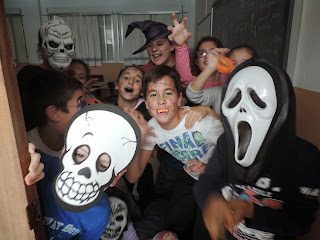
CHILDREN DRESSED WITH HALLOWEEN COSTUMES
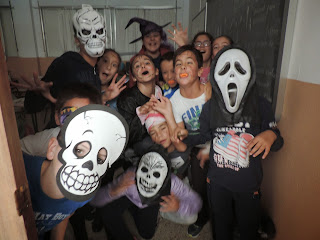


HERE YOU HAVE A VIDEO OF THIS MOMENT:


SOME CRAFTS MADE IN CLASS WITH LITTLE
CHILDREN


BAT


GHOST


BLACK BATS


JACK O´ LANTERN
HALLOWEEN WITH LESLIE

Leslie shows to the students of fith level of Primary Education, a halloween presentation.Then,they dance and sing, some songs,all together, with their teachers and Leslie.
It was a beatiful experience!


A FEW YEARS AGO ,WE CELEBRATED HALLOWEEN IN OUR SCHOOL
Las aulas se llenaron de todos los símbolos de Halloween y los pequeños de infantil y primer ciclo de primaria de nuestro cole, disfrutaron además este año, de una bonita representación, en la que dos de nuestros profes de inglés que imparten clase en infantil, Estrella y Tomás, encarnando la figura de una bruja (witch) y un mago(magician) respectivamente,los hicieron reir, cantar y bailar , aprendiendo el vocabulario en inglés , en un entorno cargado de ilusión y entretenimiento.


HALLOWEEN A TRADITIONAL FESTIVAL IN UK AND THE USA. NOW IN SPAIN

  FROM THE BILINGUAL SECTION AND THE ENGLISH DEPARTMENT, WE HAVE CELEBRATED HALLOWEEN AS PART OF THE TRADITIONS OF ENGLISH-SPEAKING COUNTR...